Journal
Side-sleeper shoulder pain: what the pressure map shows
Why a side sleeper wakes with a sore shoulder, what the fitting measures, and what a mattress can do about it.
CasAI Sleep Studio · 1 September 2026 · 4 min read
You go to sleep fine. You wake at six with one shoulder that feels like it has been leaned on all night, because it has. Side sleepers carry most of their weight on two points, the shoulder and the hip, and a mattress that is even slightly too firm pushes back on both until morning.
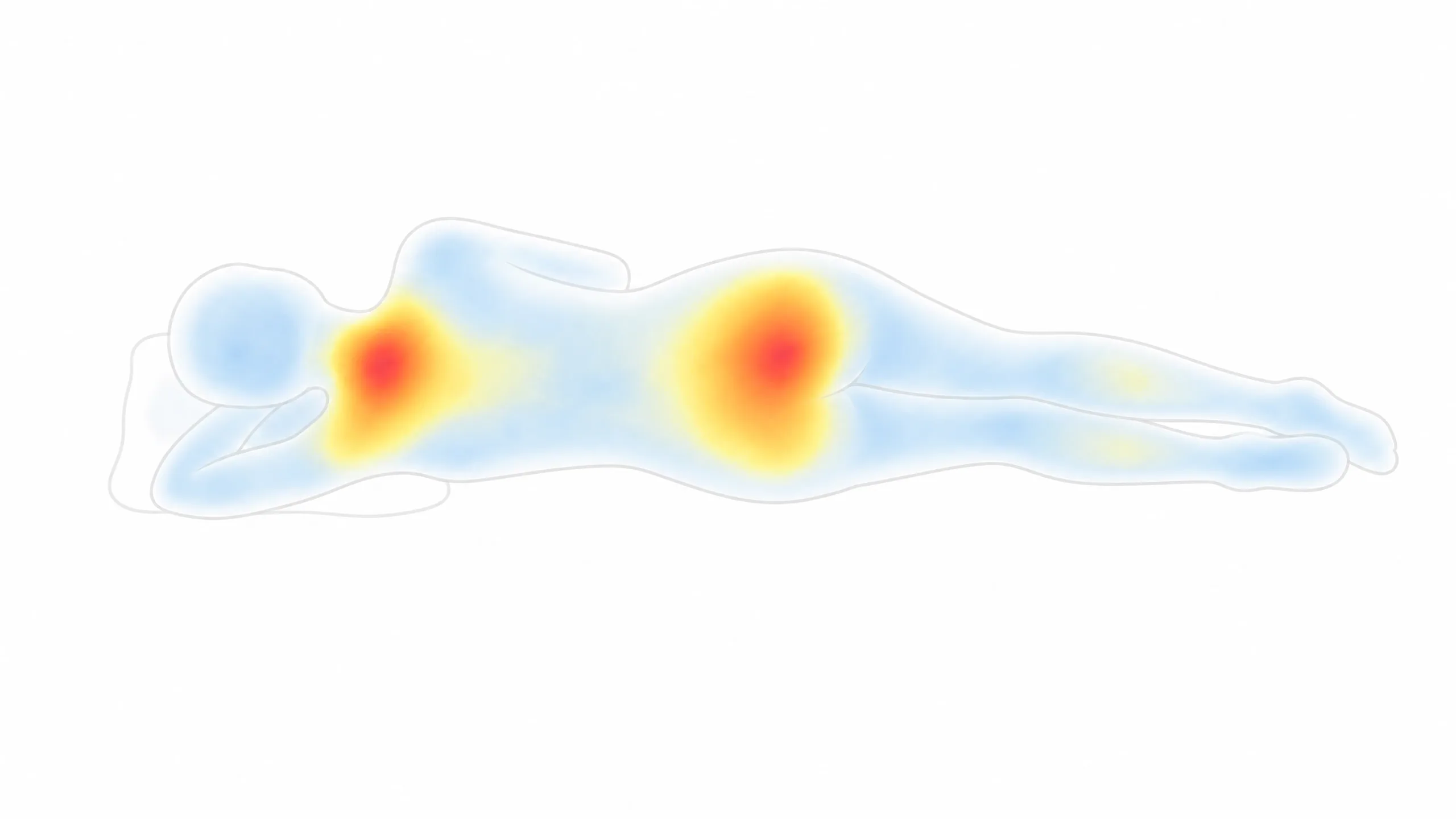
The picture at the top of this page is a pressure map of a side sleeper. It is the kind of map the fitting produces, and it explains the shoulder better than any adjective on a showroom tag.
What the map is measuring
Lie on the trial bed and the sensors read where your weight lands. The result is a heat map: cool where the mattress barely notices you, warm where it is holding you up, red where it is being asked to hold a lot in a small area.
For a side sleeper the red arrives in two places and nowhere else. One is the shoulder, because the arm and the ribcage stack on top of it. The other is the hip, for the same reason. Everything between them, the waist, is a gap that the mattress has to fill or leave hanging.
A sample from a recent fitting reads like this: side sleeper 70% of the night, peak pressure at shoulder and hip, an 11 degree lumbar dip, a broad shoulder over a lighter hip, and a pillow height of 12 cm. Those five lines are the whole problem written down.
Why the shoulder hurts and the hip does not
The hip is a big joint with muscle around it. It takes pressure and forgets about it.
The shoulder is a small joint held in place by tendons, sitting under the weight of the arm. Press on it for seven hours and the tissue around it stops getting the blood flow it wants. You turn over in the night to relieve it, which is why side sleepers move so much, and you still wake sore because you turned back.
A firmer mattress makes this worse, not better. Firmness holds the spine straight for a back sleeper. For a side sleeper it means the shoulder cannot sink, so the spine bends the other way and the neck tilts up to meet the pillow. That is where the 11 degree dip in the sample comes from, and it is why the pillow height matters as much as the mattress.
What a mattress can do about it
Three things, in rising order of how much they change.
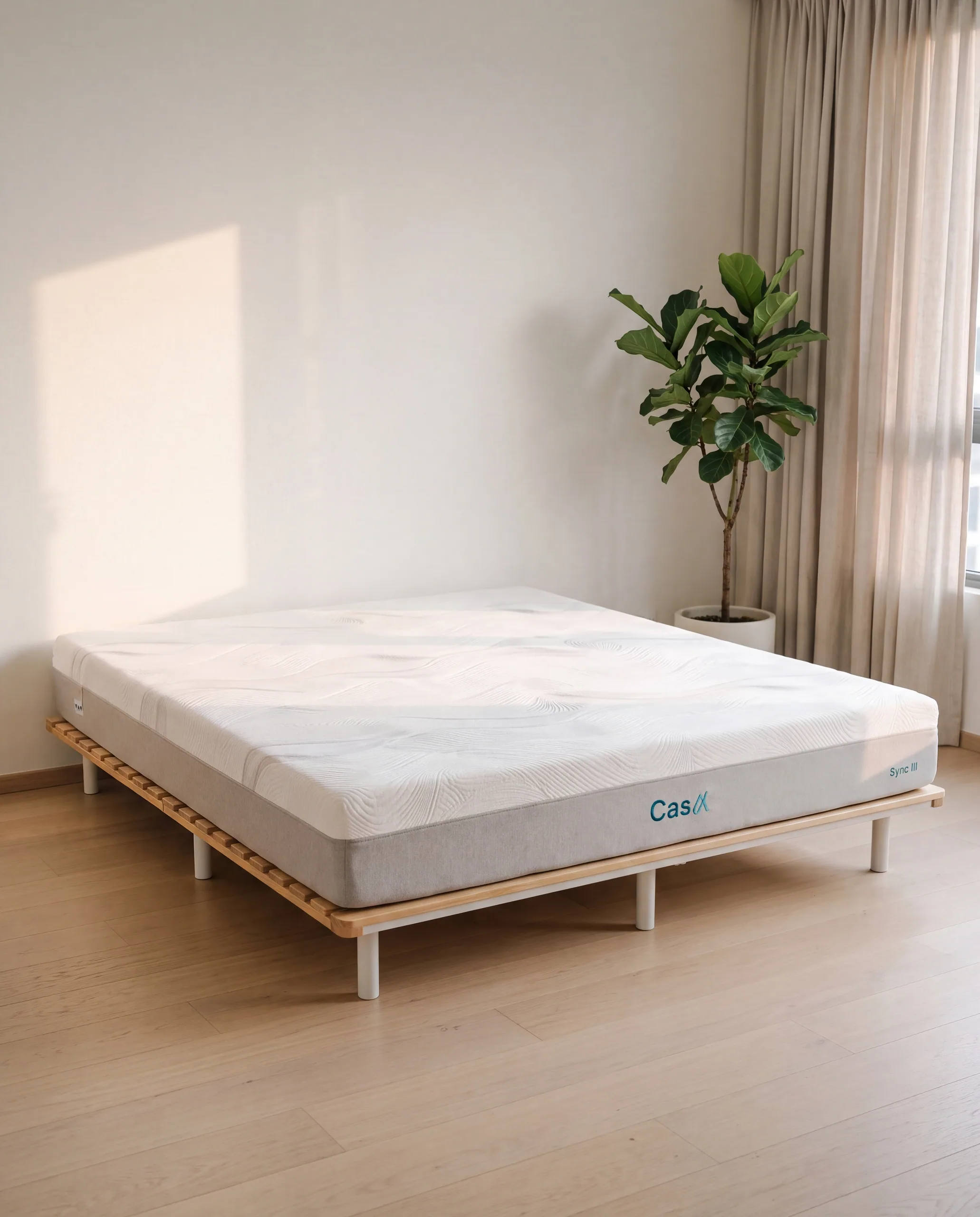
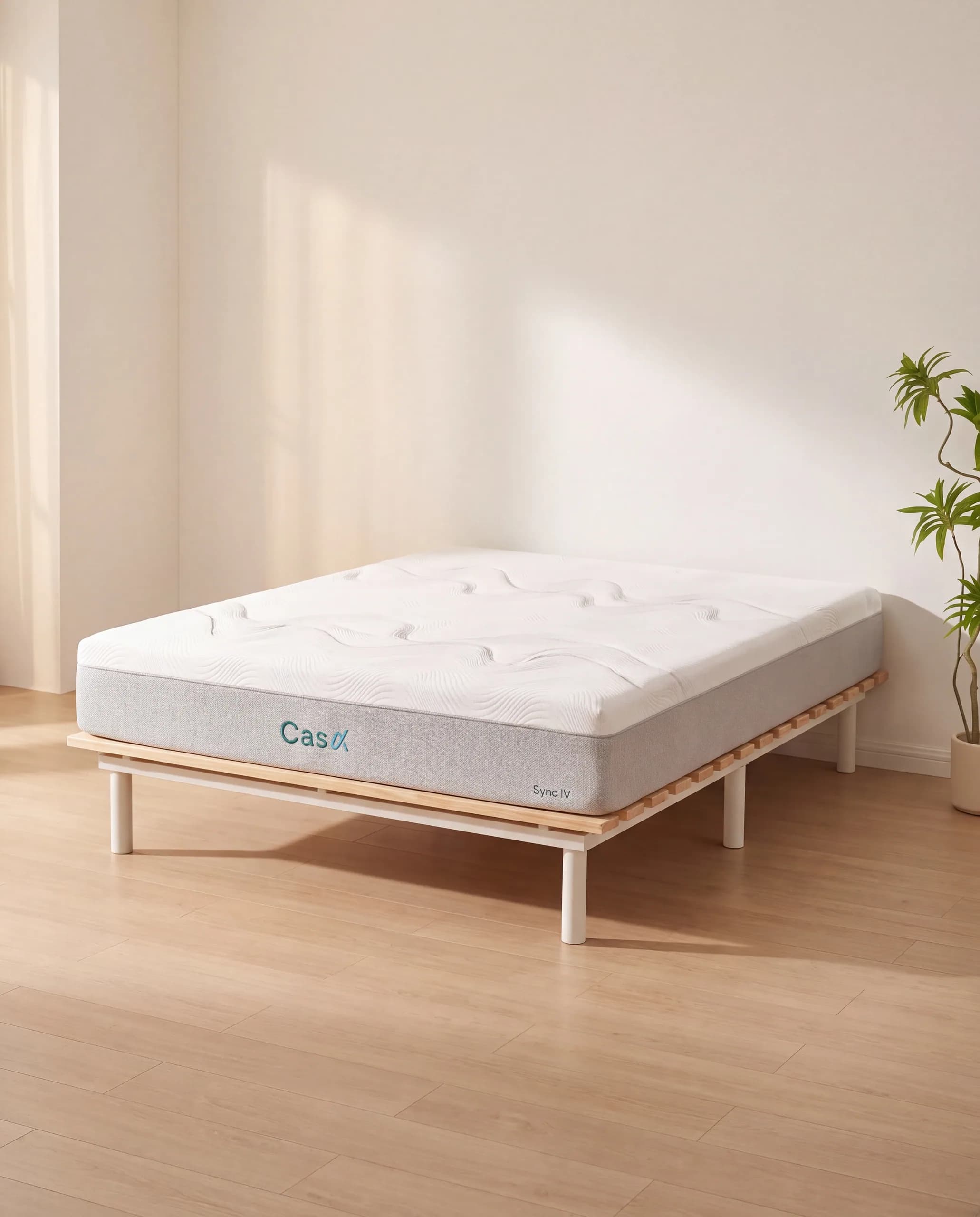
A softer feel lets the shoulder sink. In the Sync range that is the Sync III or Sync IV, the medium-soft and soft grades. The fitting will tell you which, because a broad shoulder over a lighter hip needs more give at the top of the bed than a body that is the same width all the way down. See the Sync range.
Zoned support lets the shoulder sink and holds the hip at the same time, so the spine stays level. A single-feel mattress cannot do both. It picks one firmness and applies it everywhere.
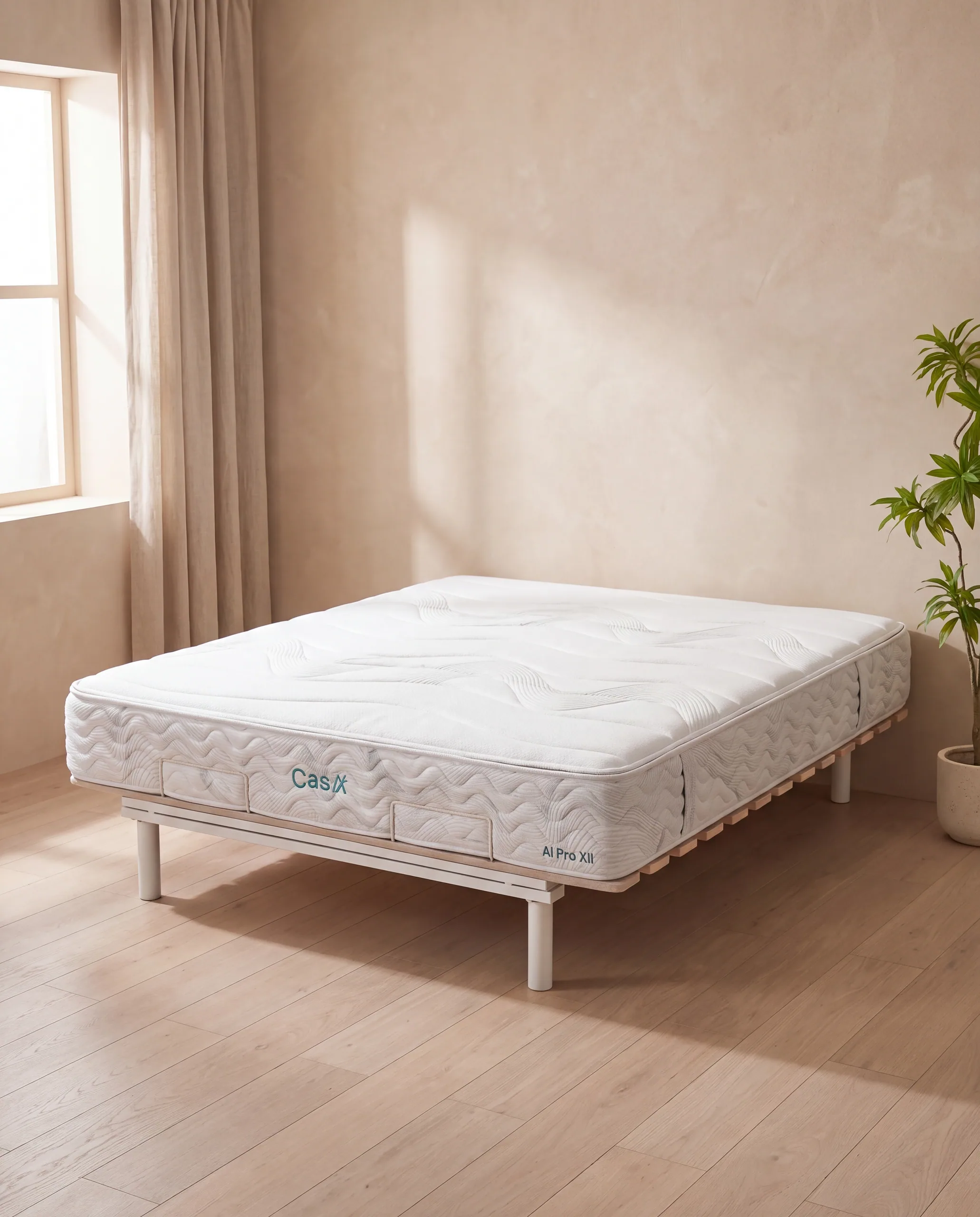
A bed that changes under you does the zoning by itself, every time you move. The AI Pro XII has twelve air chambers, six a side, and reads the pressure in each one all night. When you turn onto your side, the chambers under the shoulder soften and the ones under the waist firm up to fill the gap. When you turn back, they change again. Nobody presses a button. The left and right halves are read separately, so if the person next to you sleeps on their back, their side stays set for a back.
The pillow is half of it
A 12 cm contour pillow is not a random number. It is the distance between the mattress surface and the side of your head when your shoulder is resting where it should. Too low and the neck bends down; too high and it bends up. Either way the shoulder is asked to make up the difference.
The fitting measures your pillow height along with the mattress reading. The CloudScan pillows come in 8, 10 and 12 cm for that reason.
What to do with a sore shoulder
Do not guess. The showroom tag says soft, medium or firm, and none of those is a measurement.
Come in, lie on your side for three minutes, and look at your own map on the screen. If the red sits at the shoulder and hip, you will see it, and the recommendation follows from what was measured rather than from what you thought you liked. You keep your fitting results whether you buy or not.
Book a free fitting and see your own map.